
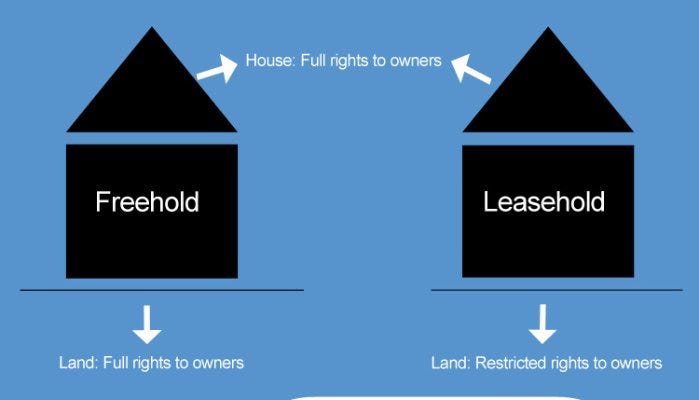
When I first started working with landlords in Leeds, I remember one particular case that has stuck with me ever since. A young couple had bought what they thought was the perfect buy-to-let flat. It was in a prime location near the city centre, had strong rental potential, and they were confident it would deliver reliable returns. What they had overlooked, however, was the fact that the property was leasehold, with a ground rent clause that would double every ten years. Within a short space of time, their costs started spiralling, and the value of their investment began to drop. Their story highlights just how important it is to understand the difference between freehold and leasehold before diving into property investment.
What is Freehold?
Owning a freehold property means you own both the building and the land it stands on outright. You are in complete control of the property, and there is no time limit on your ownership. In practice, this gives you greater security and freedom. For landlords, this means you can manage the property without restrictions from a superior landlord, and you are not subject to ground rents or service charges (unless the property is part of an estate with shared amenities). Houses in Leeds and across West Yorkshire are typically sold as freehold, which makes them particularly attractive for buy-to-let investors looking for simplicity and long-term stability.
What is Leasehold?
Leasehold ownership is very different. When you purchase a leasehold property, you only own the property for the length of the lease, which is essentially a long-term rental agreement with the freeholder. Leases are commonly set for 99, 125 or even 999 years, but as the lease length shortens, the property’s value can decrease. Leaseholders are usually required to pay annual ground rent, service charges, and maintenance fees, particularly in flats and apartments. For landlords, this means ongoing costs that can eat into rental profits. It can also limit what you can do with the property without permission from the freeholder, such as making alterations or subletting.
Key Differences Between Freehold and Leasehold
The most obvious difference between the two types of ownership lies in control and cost. Freehold gives you full control of the property and land, whereas leasehold comes with restrictions and additional charges. Here are some of the most significant contrasts:
- Ownership length: Freehold is permanent, leasehold is time-limited.
- Control: Freehold gives you complete autonomy, leasehold requires permissions.
- Costs: Freehold may still come with some communal charges, but leasehold often includes ground rent, service charges, and sometimes major works contributions.
- Resale value: Freehold properties tend to hold their value better, while leasehold values can fall as the lease shortens.
- Mortgageability: Lenders can be hesitant about leasehold properties with short leases, which can limit your financing options.
Why Freehold is Preferred by Landlords
Most landlords prefer freehold because it simplifies the investment. There are no unexpected charges from a managing agent, no ground rents, and no complications around extending leases. Freehold properties are generally easier to sell and more appealing to tenants who like the idea of a landlord having full control. In Leeds, the majority of traditional terraced and semi-detached homes are freehold, making them a common choice for local landlords and investors.
When Leasehold Can Work in Your Favour
That said, not all leasehold properties should be avoided. In fact, some of the most attractive investment opportunities in Leeds city centre are leasehold apartments. With rising demand from young professionals and students, city flats are often in high demand and can deliver excellent yields despite the additional costs. The key is to do thorough due diligence. At KeyStep Properties, we work closely with investors to review lease terms, highlight potential risks, and calculate whether the returns still make sense once all costs are factored in.
Ground Rents and Service Charges – The Hidden Costs
One of the biggest challenges with leasehold is the uncertainty around service charges and ground rents. According to data published by the Leasehold Knowledge Partnership, more than 4 million homes in England are leasehold, and around 100,000 of those are caught in doubling ground rent clauses that have made them difficult to sell. While recent government reforms have aimed to limit unfair practices, landlords still need to be cautious. A sudden demand for major building works, such as roof repairs or fire safety upgrades, can cost leaseholders thousands of pounds. This can have a devastating impact on cash flow if it comes as a surprise.
The Impact on Financing and Investment
From a financing perspective, lenders are often wary of short leases. Many high-street banks will not lend on a property with less than 70 years remaining on the lease, and the cost of extending a lease increases significantly once it drops below 80 years. For landlords using buy-to-let mortgages, this can make leasehold investments more complex. At KeyStep Properties, we often advise landlords on whether a leasehold property is worth pursuing, taking into account the potential need for future lease extensions and the impact this will have on profitability.
Freehold vs Leasehold in Leeds
In Leeds, the split between freehold and leasehold is quite clear. The majority of houses, especially those in suburban areas like Chapel Allerton, Headingley and Horsforth, are sold as freehold. Flats and city-centre apartments are usually leasehold. This makes it important for landlords to align their investment strategy with the type of ownership they are comfortable managing. Those looking for hands-off investments may prefer freehold houses that require less oversight, while those chasing higher yields might opt for leasehold flats despite the added complexity.
Case Study – Leasehold Investment in Leeds
A client I worked with a few years ago purchased a two-bedroom leasehold apartment near Leeds Dock. The service charges were around £1,800 per year, with a modest ground rent of £200. While these charges seemed manageable, the freeholder announced a £25,000 contribution per apartment for external cladding works following changes to building regulations. For a landlord expecting net yields of around 6 per cent, this wiped out several years of profit in one hit. Fortunately, we were able to negotiate a payment plan and restructure the rental strategy to help absorb the costs. This example shows just how unpredictable leasehold investments can be, even in strong rental markets.
Practical Tips for Landlords
If you are considering investing in either freehold or leasehold property, here are some practical tips to keep in mind:
- Always check the lease length before purchasing, and avoid anything below 80 years without factoring in extension costs.
- Review ground rent clauses carefully and watch out for any that increase over time.
- Request details of recent and upcoming service charges, as these can drastically affect returns.
- For freehold properties, check whether they are part of a managed estate with shared costs.
- Speak to a property management specialist like KeyStep Properties to review the investment before committing.
How KeyStep Properties Can Help
At KeyStep Properties, we provide expert property management services for landlords across Leeds and West Yorkshire. Whether you are investing in freehold or leasehold, our team can help you navigate the complexities, manage your rental property, and maximise your returns. We also offer guaranteed rent schemes, letting-only services, HMO management, and property sourcing solutions tailored to investors. By partnering with us, you gain peace of mind knowing that your property is in safe hands.
Understanding the difference between freehold and leasehold is one of the most important steps in building a successful property portfolio. Both can be profitable if approached with care, but both also come with very different responsibilities and risks. If you are unsure which route is right for you, or if you want to ensure that your next property investment is structured for success, KeyStep Properties is here to help.


